

Selling an Inherited Home in Fort Lauderdale: What Broward Heirs Need to Know Before Listing
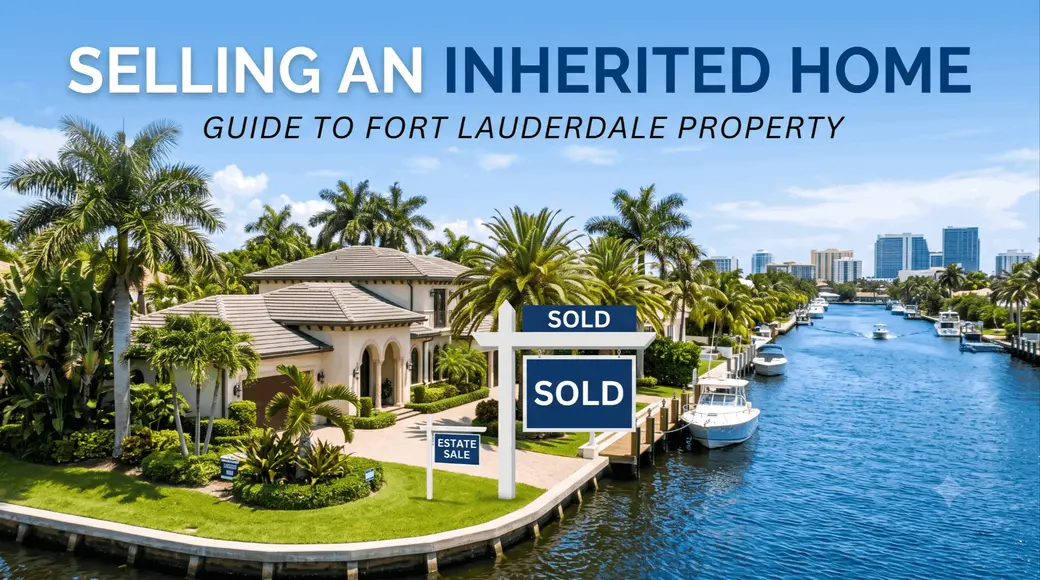
Do You Have to Go Through Probate to Sell an Inherited House in Fort Lauderdale?
In most cases, yes — Florida real estate can't legally transfer to heirs, or be sold, until it passes through probate in Broward County's 17th Judicial Circuit. Simple estates using summary administration can close in one to three months, while formal administration typically runs six to twelve months, with most Broward files wrapping up between months eight and twelve. A July 2026 change to Florida law just raised the summary administration threshold to $150,000, which means more estates now qualify for the faster track — timing that matters a great deal if you're sitting on a Rio Vista or Harbor Beach property and need to know how soon you can list.
By Scott Morreau | July 9, 2026
Inheriting a home in Fort Lauderdale is rarely simple. You're grieving, you're often coordinating with siblings or other heirs who live out of state, and somewhere in the middle of it all you have to figure out whether you can even put the house on the market yet.
Many families have gone through this exact situation — usually a waterfront or single-family home in Victoria Park, Coral Ridge, or along the New River that's been in the family for decades. The good news is that Florida is one of the more forgiving states for inherited property. No state estate tax, no inheritance tax, and a tax break most heirs don't even know they qualify for. The part that trips people up is the process, the timeline, and what happens when everyone who inherited the house doesn't agree on what to do with it.
Here's what you actually need to know.
How Probate Works in Broward County — and How Long It Actually Takes
If your loved one owned the home solely in their own name — no trust, no joint owner with survivorship rights, no Lady Bird deed — the property has to go through Broward County's probate court before it can be sold. That happens at the Broward County Courthouse, 201 SE 6th Street, and it's one of the busier probate dockets in South Florida.
There are two tracks:
- Summary administration — available for smaller estates or when the person has been deceased more than two years. As of July 1, 2026, Florida raised the qualifying threshold from $75,000 to $150,000, which now pulls a meaningful number of estates into this faster lane. This track typically closes in one to three months.
- Formal administration — required for larger or more complex estates, including most homes in the $750K–$3M range once you factor in the property value alone. This includes a mandatory three-month creditor claim period and generally takes six to twelve months from filing to closing on the sale, though Broward's court will typically process an uncontested Petition to Sell Real Property in three to five weeks once the estate is otherwise in order.
The personal representative — the person named in the will, or appointed by the court if there wasn't one — is the one authorized to sign a listing agreement and a purchase and sale contract. If the will grants "power of sale," you generally don't need separate court approval to close. If it doesn't, or there wasn't a will, expect an extra court authorization step before you can accept an offer.
One detail that catches people off guard: even after Letters of Administration are issued, title companies often won't insure the sale until there's an Order Determining Homestead on file, if the property was the deceased's primary residence. That order can take time to obtain and is worth starting early rather than waiting until you have a buyer under contract.
The Tax Break Most Heirs Don't Know About: Step-Up in Basis
This is the part of the conversation that tends to be a relief. When you inherit a home, its cost basis "steps up" to the fair market value on the date of death — not what your parents or grandparents originally paid for it decades ago.
Say a home in Las Olas Isles was purchased in 1988 for $180,000 and it's worth $1.4 million today. If you'd received that house as a gift during your parent's lifetime, you'd inherit their original $180,000 basis and owe capital gains tax on nearly the entire $1.2 million of appreciation when you sold. Because you inherited it instead, your basis is the $1.4 million value at death. If you sell close to that number, you may owe little to no capital gains tax at all.
Florida doesn't add its own estate, inheritance, or capital gains tax on top of that, which is one of the reasons selling an inherited property here is considerably less punishing than in many other states. I go into the federal mechanics of capital gains on a sale in more detail in Capital Gains Tax When Selling Your Fort Lauderdale Home — the step-up in basis is the single biggest factor separating an inherited sale from a typical one.
None of this replaces advice from a CPA who can confirm your specific basis and holding period, especially if the estate includes other property or if you've made improvements since inheriting. But knowing this exists changes how you should think about pricing and timing the sale.
What Happens to the Property Taxes When You Inherit a Homesteaded House
Here's the surprise that catches heirs off guard almost every time: the homestead exemption and the Save Our Homes 3% assessment cap end the moment the original owner passes away — unless the property passes to a surviving spouse. For everyone else, Broward County reassesses the home to full market value, and the tax bill can jump dramatically in a single year.
I've seen this play out on homes in Poinsettia Heights and Wilton Manors where a longtime owner's assessed value, capped for 20-plus years under Save Our Homes, sat far below market. Once that cap resets, the annual tax bill can double or triple — a real carrying cost to plan for if the estate is going to hold the property for months while probate runs its course. I cover how the Save Our Homes cap works and resets at sale in more detail in Florida's Save Our Homes Portability, which is worth a read if you're weighing whether to sell quickly or hold the property longer.
If you plan to move into the home and make it your own permanent residence rather than sell it, you can apply for your own homestead exemption by March 1 of the following year — but that starts your own Save Our Homes cap at zero, and it doesn't help if the goal is to sell.
When Heirs Disagree: Buyouts, Mediation, and Forced Sales
Multiple heirs typically inherit a property as tenants in common, each owning an undivided share of the whole. In practice, that means everyone generally has to agree before the property can be listed and sold — and disagreements are common, especially when one sibling wants to keep the family home and another wants (or needs) the cash.
Florida gives co-owners three ways through this:
- Buyout — one heir purchases the others' shares at fair market value, usually based on an independent appraisal.
- Mediation — typically $1,000–$3,000 total and often required by the court before a partition case can proceed to trial. Most families settle here rather than go further.
- Partition action — any co-owner can file under Florida Statute §64.031 to force a sale, even over another heir's objection. The court can award attorneys' fees, which usually come out of the sale proceeds, meaning every heir effectively shares that cost.
If you're one of several heirs on a Fort Lauderdale property and the family can't reach agreement quickly, getting an independent, well-documented valuation early is often what unlocks the conversation — it gives everyone a number to negotiate around instead of guessing.
Selling an inherited home isn't like a typical listing. There's a court process running in parallel, tax considerations that don't apply to a regular sale, and sometimes family dynamics that need careful handling alongside the transaction itself. If you're an heir trying to figure out your options on a property in Fort Lauderdale, Wilton Manors, or anywhere in Broward County, I'm happy to walk you through what the timeline looks like for your specific situation and put together a realistic value estimate for the property — often before probate has even concluded, so the family has real numbers to work with. Reach out at scottsellsfl.com.
Frequently Asked Questions
How long does it take to sell an inherited house in Broward County?
It depends on the size of the estate and whether it qualifies for summary administration. Smaller estates (now up to $150,000 as of the July 2026 law change) can close probate in one to three months. Larger estates go through formal administration, which typically takes six to twelve months before the sale can close, though the property can often be listed and marketed while probate is still pending.
Do I owe capital gains tax if I sell a house I inherited in Fort Lauderdale?
Often little to none, thanks to the step-up in basis, which resets the home's cost basis to its fair market value on the date of death. If you sell close to that value, there may be little to no taxable gain. Florida also has no state estate, inheritance, or capital gains tax. Confirm your specific numbers with a CPA before you list.
Can I sell an inherited house before probate is finished?
You can often list and market the property, and in some cases sign a contract, while probate is pending — but you generally can't close the sale until the personal representative has the legal authority to convey title, either through a will's power of sale provision or court authorization. An experienced probate attorney and a Realtor familiar with these sales can usually run the marketing timeline in parallel with the court process.
What if my siblings and I can't agree on selling the family home?
Florida law gives co-owners a few paths forward: one heir can buy out the others at appraised value, the family can go through mediation (typically $1,000–$3,000), or any co-owner can file a partition action to force a sale under Florida Statute §64.031. Most families resolve this well before it reaches a courtroom once everyone has a real, independent valuation to work from.
Will my property taxes go up on an inherited Fort Lauderdale home?
Almost certainly, unless the home passes to a surviving spouse. The homestead exemption and Save Our Homes assessment cap end at the original owner's death, and Broward County reassesses the property to full market value — which can significantly increase the annual tax bill on a home that had been under-assessed for years. This matters most if the estate plans to hold the property for a while before selling.
About Scott Morreau
Scott Morreau, PA is a top-rated Realtor® and Broker Associate with Real Broker, LLC, specializing in residential real estate across Fort Lauderdale, Wilton Manors, Oakland Park, Pompano Beach, Dania Beach, and Broward County. Licensed since 2001 and active in South Florida since 2006, Scott has closed over $52 million in Florida real estate — including $7.1 million in the past year — and is ranked among the top 500 agents in the region with 70+ five-star reviews. Scott specializes in luxury and waterfront homes, investment properties and 1031 exchanges, relocation to and from South Florida, and serving LGBTQ+ clients, and is known for his concierge-level preparation and client-first philosophy he calls A Better Real Estate Experience.
Categories
- All Blogs (186)
- 01. Local News & Lifestyle (5)
- 02. Market Updates (21)
- 03. Home Prices & Inventory (10)
- 04. Mortgage & Interest Rates (11)
- 05. Affordability & Rent vs. Buy (8)
- 06. Buyer Tips, Myths & Guides (35)
- 07. Selling Tips, Myths & Guides (44)
- 08. Demographic Trends (11)
- 09. New Construction (7)
- 10. Real Estate News & Insights (14)
- 11. Featured Listings (1)
- 12. Community Spotlights (1)
- 13. Legal & Policy Updates (8)
Recent Posts


"My job is to find and attract mastery-based agents to the office, protect the culture, and make sure everyone is happy! "